

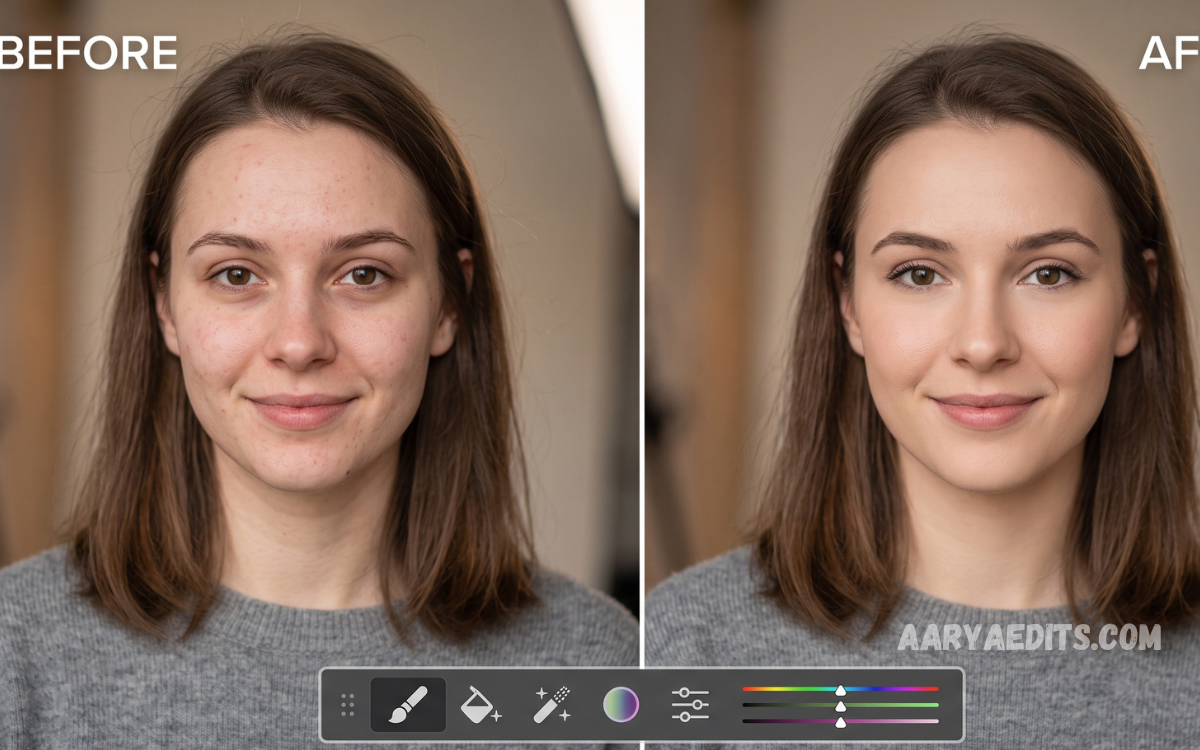
Advanced Beauty Retouching and Editing 2026 is focused on creating polished portraits while preserving the natural identity, texture, and character of the subject. Modern editors are moving away from heavy smoothing and unrealistic transformations toward subtle improvements that make photographs look refined and believable.
Professional retouching now combines detailed manual techniques with intelligent editing tools, allowing photographers to work more efficiently without sacrificing creative control. The strongest results are usually those where viewers notice the quality of the portrait rather than the editing itself.
What Is Advanced Beauty Retouching?
Advanced beauty retouching is the professional process of improving a portrait through carefully controlled corrections to skin, facial features, hair, makeup, lighting, color, and overall image quality. It goes beyond applying a simple beauty filter because every adjustment is made according to the photograph, lighting conditions, and desired visual style.
The goal is not to remove everything that makes a person unique. Instead, professional retouching corrects temporary distractions while maintaining pores, natural facial structure, realistic highlights, shadows, and recognizable characteristics. This approach has become increasingly important as audiences show greater appreciation for authentic-looking imagery.
Natural Skin Retouching in 2026
Natural skin texture is one of the most important principles of Advanced Beauty Retouching and Editing 2026. Professional editors avoid completely flattening the skin because excessive smoothing can remove pores and fine details, producing the familiar artificial or plastic appearance associated with aggressive filters.
A better approach is selective correction. Temporary blemishes, distracting redness, uneven patches, and small imperfections can be reduced while permanent characteristics and natural texture remain visible. This creates a cleaner portrait without making the subject appear like a completely different person.
Frequency Separation and Texture Control
Frequency separation remains a useful advanced technique because it separates color and tonal information from fine skin details. This allows an editor to work on uneven tones while protecting important texture, making the correction more controlled than simply applying a strong blur.
However, technique alone does not guarantee quality. The strength of the adjustment must be carefully controlled, especially around the nose, cheeks, forehead, and under-eye area. Overworking these regions can make skin appear flat, so experienced editors constantly compare the retouched image with the original.
Dodge and Burn for Professional Results
Dodge and burn is another important technique for high-end beauty editing. Rather than changing the entire shape of the face, it allows the editor to subtly control highlights and shadows, helping restore dimensionality and improve the appearance of uneven lighting.
Careful tonal adjustments can emphasize natural facial contours, reduce distracting shadows, and create a more balanced appearance. The best results are usually subtle because the objective is to enhance existing light rather than create an obviously artificial face.
Facial Features and Identity Preservation
Modern beauty editing should preserve the subject’s recognizable identity. Eyes, nose, lips, jawline, cheeks, and other facial characteristics should not be reshaped simply to match a generic beauty standard. In 2026, authenticity has become an important part of professional visual communication.
Small corrections can still be useful when requested, but they should remain proportional to the original photograph. Excessive reshaping can create an unrealistic result and may also reduce the emotional connection viewers have with the portrait.
Eye and Teeth Enhancement
Eyes often receive careful attention during professional retouching because they naturally attract the viewer’s attention. Editors may improve brightness, reduce distracting redness, enhance clarity, and make small adjustments to contrast while keeping the original expression intact.
Teeth can also be corrected when necessary, particularly when lighting creates uneven coloration. Professional editing avoids making teeth completely white because excessive whitening can look unnatural. A controlled adjustment that maintains realistic tonal variation generally produces a more convincing portrait.
Hair and Makeup Retouching
Hair retouching involves removing distracting stray hairs, correcting uneven sections, improving definition, and maintaining natural volume. Individual strands should not always be removed because they contribute to realism and help preserve the original hairstyle.
Makeup editing can involve balancing foundation tones, refining lipstick color, improving eye makeup, and correcting areas affected by lighting. The objective is to enhance the makeup that already exists rather than replace the subject’s appearance with an unrelated digital style.
Advanced Color Correction and Skin Tones
Color correction is a major part of professional beauty editing because skin can easily become too warm, too cool, too red, or too pale. Editors carefully balance white balance, exposure, highlights, shadows, saturation, and individual color channels to create a consistent appearance.
Modern portrait trends generally favor balanced and natural color rather than extreme grading. Warm skin tones, soft contrast, realistic highlights, and restrained sharpening can create an elegant appearance while keeping the portrait visually believable.
Lighting and Contouring Adjustments
Even excellent photography can contain uneven lighting across the face. Advanced editing can correct distracting brightness differences and restore visual balance without making the subject appear artificially illuminated.
Digital contouring should be approached carefully. Instead of dramatically changing facial proportions, professional editors can use subtle light and shadow adjustments to strengthen the existing structure. This creates depth while preserving the original photographic character.
Background and Clothing Cleanup
Beauty retouching is not limited to the face. Distracting objects, uneven backgrounds, clothing wrinkles, dust, and other visual interruptions can reduce the quality of a professional portrait. Cleaning these elements can make the subject stand out more effectively.
Background corrections should also respect perspective, lighting, and depth. If an editor removes or changes an object, the replacement should match the surrounding environment. Poor masking or inconsistent shadows can immediately reveal that the image has been heavily edited.
AI-Assisted Beauty Editing in 2026
AI-assisted editing is becoming an important part of modern photography workflows. Intelligent tools can help with tasks such as portrait enhancement, blemish removal, color adjustments, background editing, culling, and batch processing, significantly reducing repetitive work.
Nevertheless, automation should support professional judgment rather than replace it. Current editing trends emphasize controlled and practical use of AI instead of relying on one-click transformations. Human oversight remains essential when accuracy, identity, texture, and brand standards matter.
Balancing AI With Manual Retouching
The strongest Advanced Beauty Retouching and Editing 2026 workflows often combine automated assistance with manual refinement. AI can identify areas that need attention quickly, while the editor evaluates whether the proposed changes actually suit the subject and photograph.
This hybrid approach provides both efficiency and creative control. Automation can handle repetitive corrections, while experienced retouchers remain responsible for decisions involving skin texture, facial identity, lighting, color harmony, and the overall aesthetic direction.
High-End Editorial Beauty Editing
Editorial beauty photography often requires a more refined and sophisticated approach. Every detail can matter, including skin texture, makeup, hair, jewelry, clothing, lighting, and color harmony. The finished image should look intentional from the smallest detail to the overall composition.
High-end editing does not necessarily mean heavy editing. A luxury appearance can be achieved through precise tonal control, clean textures, balanced colors, carefully shaped light, and consistent detail. Subtlety often creates a more premium result than dramatic manipulation.
Beauty Retouching for Social Media
Social media has increased the demand for attractive portrait editing, but excessive filters can quickly make images look generic. In 2026, creators increasingly benefit from maintaining recognizable features while improving lighting, skin consistency, color, and overall presentation.
Images may also be viewed on small mobile screens, where subtle adjustments can have a strong effect. Editors therefore need to consider contrast, clarity, skin color, and overall visual impact while avoiding excessive sharpening or smoothing that becomes obvious after compression.
Professional Workflow for Beauty Retouching
A professional workflow normally begins with reviewing the original photograph before making any changes. Exposure, white balance, composition, lighting, skin condition, background distractions, and the intended final use should be evaluated first.
After the basic corrections, the editor can move into detailed retouching, followed by color grading, final sharpening, and quality control. Working non-destructively whenever possible makes it easier to revise adjustments and compare the final image against the original.
Read Also: Professional Lightroom Skin Tone Editing for Natural-Looking Portraits
Common Beauty Retouching Mistakes
One of the most common mistakes is excessive skin smoothing. Removing every pore, line, and natural variation can destroy facial texture and make the subject appear artificial. Another problem is excessive whitening of teeth or eyes, which can make the face look unnatural.
Over-sharpening, unrealistic body reshaping, inconsistent skin tones, poor masking, and excessive saturation can also reduce image quality. Professional retouching requires restraint because the purpose is to improve the photograph, not demonstrate how many editing effects can be applied.
Choosing the Right Retouching Style
The appropriate retouching style depends on the purpose of the photograph. A fashion campaign may require a polished editorial appearance, while a corporate portrait may benefit from restrained corrections and realistic skin tones.
Personal portraits, beauty campaigns, e-commerce images, social media content, and professional headshots can all require different approaches. Understanding the intended audience and visual message helps determine how much editing is appropriate.
The Future of Beauty Retouching
The future of beauty retouching is likely to become increasingly intelligent, fast, and context-aware. Research in 2026 is exploring systems that can understand retouching instructions, plan adjustments, and perform detailed edits while maintaining image fidelity.
Despite technological progress, artistic judgment will remain important. Current industry discussions show that professional photographers continue to value practical editing workflows and authenticity rather than treating AI as a replacement for photographic expertise.
Why Authenticity Matters in 2026?
Beauty standards in digital photography are changing. Instead of automatically expecting flawless skin and perfectly symmetrical features, many audiences respond positively to images that preserve individuality and human characteristics.
This makes authenticity an important professional consideration. A successful retouched photograph should ideally look like the best version of the original image rather than a completely reconstructed person. Subtle corrections can improve confidence and presentation without removing identity.
Best Practices for Advanced Beauty Retouching
Always begin with a high-quality original and work carefully through the image rather than applying identical settings to every portrait. Preserve important facial details, inspect skin at different zoom levels, and regularly compare the edited image with the original.
Use AI and automated tools selectively, maintain realistic skin texture, control color carefully, and avoid unnecessary reshaping. Before exporting, inspect the photograph at both full resolution and normal viewing size to ensure that the final result remains natural.
Frequently Asked Questions
What is Advanced Beauty Retouching and Editing 2026?
Advanced Beauty Retouching and Editing 2026 refers to modern professional techniques for enhancing portraits while maintaining natural texture, identity, lighting, color, and realistic facial characteristics. It combines traditional retouching methods with increasingly intelligent digital tools.
Is beauty retouching supposed to remove all skin imperfections?
No. Professional retouching usually focuses on reducing temporary distractions while preserving natural pores, texture, lines, and individual characteristics. Removing every imperfection can make the portrait appear artificial.
Is AI useful for beauty retouching?
Yes. AI can accelerate repetitive tasks such as blemish removal, portrait enhancement, background editing, and batch processing. However, professional review is still important because automated corrections may not always match the intended style or preserve identity perfectly.
What is frequency separation in beauty editing?
Frequency separation is a retouching technique that separates tonal information from fine details. It can help editors correct uneven skin color while retaining texture when used carefully.
Why is dodge and burn important?
Dodge and burn provides precise control over highlights and shadows. It can improve facial depth, balance uneven lighting, and refine contours without requiring dramatic changes to the subject’s actual facial structure.
How can skin look natural after retouching?
Natural skin requires controlled corrections and preserved texture. Editors should avoid excessive blur, maintain pores and realistic variations, and compare the edited result frequently with the original photograph.
Should eyes and teeth always be brightened?
No. They should only be adjusted when necessary and within realistic limits. Excessive whitening or brightness can make the subject look unnatural and can distract from an otherwise professional portrait.
Can beauty retouching change facial features?
It can, but professional editing generally favors subtle adjustments. Major changes to facial proportions can reduce authenticity and make the subject difficult to recognize.
What makes professional beauty retouching different from a beauty filter?
A filter usually applies a broad preset effect, while professional retouching involves selective decisions based on the subject, lighting, skin, composition, and intended use. Professional editing provides much greater control and consistency.
What is the most important trend in beauty retouching in 2026?
Natural-looking enhancement is one of the most significant trends. Current approaches emphasize realistic skin texture, subtle corrections, balanced color, and preservation of individuality rather than extreme digital perfection.
Conclusion
Advanced Beauty Retouching and Editing 2026 represents a shift toward smarter, more controlled, and more authentic portrait enhancement. Modern professionals can use sophisticated editing techniques and intelligent tools to improve photographs while preserving the characteristics that make each subject unique.
The best results come from balance: clean skin without plastic texture, enhanced eyes without artificial brightness, refined contours without distorted features, and beautiful colors without unrealistic grading.
