

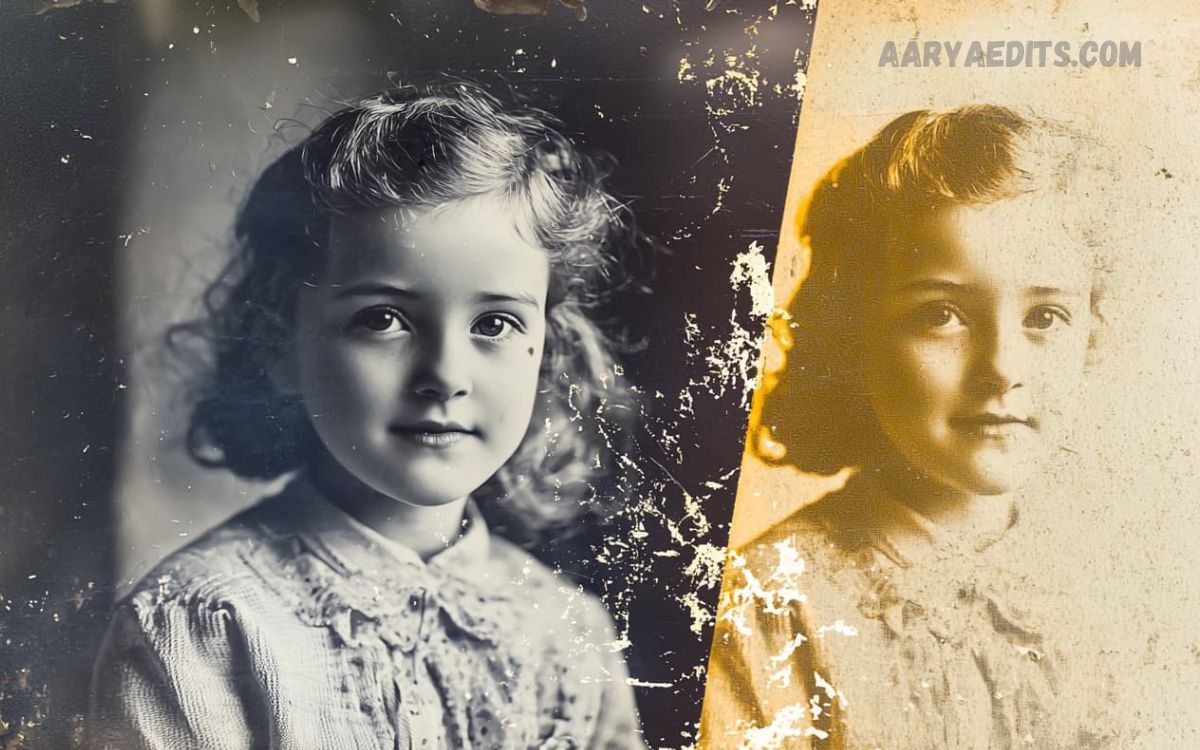
AI-Powered Photo Restoration is a modern breakthrough that combines artificial intelligence and advanced image processing techniques to revive old, damaged, and faded photographs with remarkable precision. Traditionally, restoring old images required expert manual editing, hours of work, and significant artistic skill.
Using deep learning models trained on millions of images, AI can intelligently detect scratches, tears, discoloration, and missing details in photographs. It then reconstructs lost information by predicting textures, enhancing facial features, and improving clarity, while preserving the image’s original essence.
How AI-Powered Photo Restoration Works
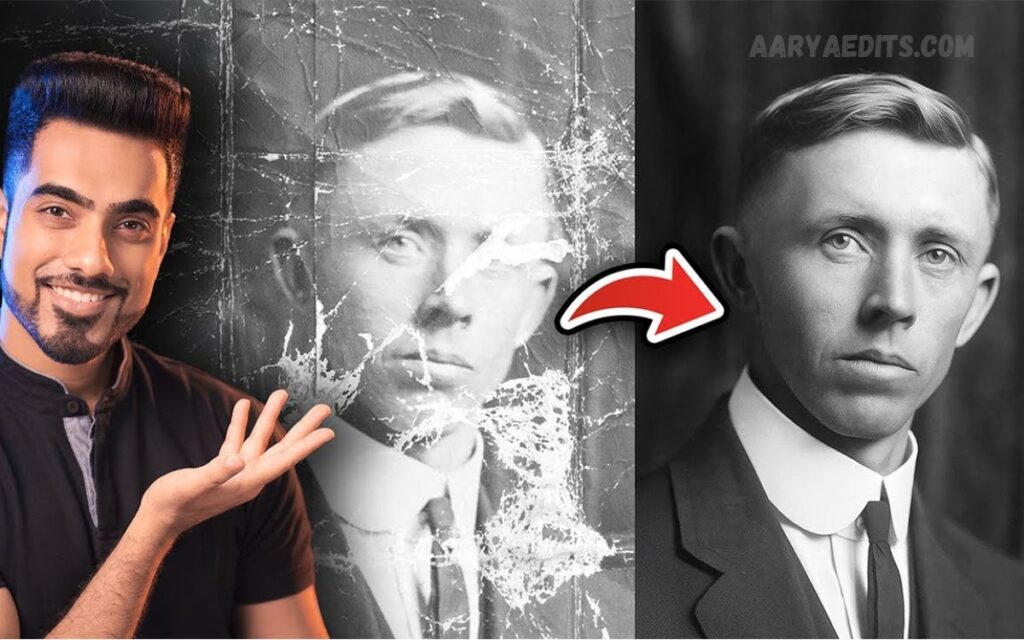
Photo Restore Here
The process of AI-based restoration follows several structured steps:
Image Analysis
The AI first scans the photograph to detect areas of damage, including cracks, fading, and missing pixels. It separates usable data from corrupted sections.
Noise Reduction
Old photographs often contain grain or noise. AI filters remove unwanted distortions while preserving key details.
Image Reconstruction
Using generative models, AI fills in missing parts of the image. This step is crucial for repairing torn corners, blurred faces, or incomplete backgrounds.
Colorization (if needed)
For black-and-white photos, AI predicts realistic colors based on context, lighting, and object recognition.
Enhancement and Sharpening
Final adjustments improve contrast, brightness, and sharpness, resulting in a clear and vibrant image.
Key Features of AI Photo Restoration Tools
Modern AI-based restoration tools offer advanced capabilities that were once impossible with manual editing:
- Automatic scratch and damage removal
- High-resolution upscaling without quality loss
- Facial detail reconstruction
- Smart color correction
- Background enhancement
- One-click restoration process
- Batch processing for multiple images
These features make restoration faster and more efficient, even for large photo archives.
Benefits of AI-Powered Photo Restoration
The impact of AI in photo restoration extends across personal, professional, and institutional use cases.
Preservation of Memories
Family photos from decades ago can be restored, allowing new generations to connect with their heritage.
Time Efficiency
What once took hours or days can now be completed in seconds or minutes.
Cost-Effective Solution
AI tools reduce the need for expensive professional restoration services.
Historical Preservation
Museums and archives use AI to restore historical photographs, making cultural documentation more accessible.
Accessibility
Even users with no editing skills can restore old images using simple AI tools.
Read Also: Cinematic Lightroom Presets: Complete Guide to Creating Stunning Movie-Like Photos
Applications of AI Photo Restoration
AI-powered restoration is widely used across multiple industries:
Personal Use
Individuals restore old family albums, childhood memories, and vintage portraits.
Media and Journalism
Restoring historical images for documentaries, publications, and news archives.
Museums and Libraries
Preserving cultural artifacts and historical documentation.
Law Enforcement
Enhancing old surveillance images or evidence photographs.
Entertainment Industry
Restoring vintage movie stills and celebrity photographs.
AI vs Traditional Photo Restoration
| Feature | Traditional Method | AI-Powered Method |
|---|---|---|
| Time Required | Hours to days | Seconds to minutes |
| Skill Level | Expert required | Beginner-friendly |
| Accuracy | Manual interpretation | Data-driven precision |
| Cost | High | Low or free tools available |
| Scalability | Limited | High (batch processing) |
AI clearly outperforms traditional methods in speed, accessibility, and efficiency while still maintaining high-quality output.
Challenges in AI Photo Restoration
Despite its advantages, AI-powered restoration has certain limitations:
- Over-enhancement may reduce authenticity
- Incorrect color prediction in complex scenes
- Difficulty with extremely damaged images
- Dependence on training data quality
However, continuous advancements in machine learning are steadily improving these limitations.
Future of AI in Photo Restoration
The future of AI-powered photo restoration is highly promising. Emerging technologies are focusing on:
- Real-time restoration during scanning
- 3D photo reconstruction
- Emotion-aware enhancement
- Higher accuracy facial recognition
- Integration with augmented reality (AR) and virtual reality (VR)
Soon, users may be able to convert old photographs into interactive digital memories.
Frequently Asked Questions
Is AI photo restoration better than manual editing?
In most cases, yes. AI is faster, more consistent, and easier to use, while manual editing is more time-consuming and requires advanced skills.
Does AI restoration reduce image quality?
No, AI generally improves quality by enhancing resolution, sharpening details, and reducing noise without losing important visual information.
Can severely damaged photos be restored?
Partially. AI can restore many damaged areas, but severely damaged or missing sections may not be perfectly reconstructed, depending on the available data.
Do I need editing skills to use AI restoration tools?
No, most AI photo restoration tools are user-friendly and require only a few clicks, making them accessible to beginners.
What types of photos can be restored using AI?
AI can restore portraits, family photos, historical images, scanned prints, and even low-resolution digital pictures.
Is AI photo restoration expensive?
Many AI tools are affordable or even free, making photo restoration much more cost-effective compared to professional manual editing services.
What is the future of AI photo restoration?
The future includes real-time restoration, 3D photo reconstruction, and even more accurate enhancement powered by advanced machine learning models.
Conclusion
AI-Powered Photo Restoration: Enhancing and Reviving Old Images with Modern Technology is revolutionizing the way we preserve memories. By combining deep learning, neural networks, and advanced image processing, AI has enabled the restoration of damaged photographs with incredible accuracy and speed.
As technology continues to evolve, AI restoration tools will become even more powerful, ensuring that no memory is ever truly lost to time.
