

Snapseed photo editing has become a popular choice for mobile users seeking powerful photo-enhancement tools without complicated editing software. Developed by Google, Snapseed combines professional editing features with a simple interface, making advanced photo adjustments accessible on smartphones and tablets. From basic brightness corrections to detailed RAW editing, Snapseed provides a wide range of tools for improving photos.
Modern smartphone cameras can capture impressive images, but even high-quality photographs may require adjustments before sharing online. Lighting, colors, shadows, composition, and small distractions can affect the final result. Snapseed photo editing helps solve these problems through precise controls, creative filters, selective adjustments, healing tools, and other features designed for flexible mobile editing.
What Is Snapseed Photo Editing?
Snapseed is a mobile photo editing application designed for enhancing and transforming digital photographs. Its interface is built around individual editing tools, allowing users to make specific changes without needing extensive experience with professional desktop software. The application supports common image formats and offers advanced options for users who want greater control over their photographs.
Snapseed photo editing can be used for everyday pictures, social media content, travel photography, portraits, landscapes, product images, and creative projects. Instead of applying one filter to an entire photograph, users can combine multiple tools and adjustments to create a more balanced and customized result.
Why Snapseed Photo Editing Is Popular
One major advantage of Snapseed is the combination of simplicity and advanced editing controls. Beginners can start with basic tools such as Tune Image, Crop, Rotate, and White Balance, while experienced users can explore curves, selective adjustments, perspective correction, double exposure, and RAW development.
Another important benefit is editing flexibility. Snapseed allows users to make changes without relying entirely on preset filters. This makes it possible to create different visual styles while maintaining control over exposure, contrast, saturation, highlights, shadows, and other important image characteristics.
Snapseed Photo Editing Tools
Snapseed includes a broad collection of editing tools that cover many common photography requirements. Each tool serves a different purpose, allowing users to approach an image from several directions instead of depending on a single adjustment.
Understanding these tools is one of the best ways to improve Snapseed photo editing skills. Once users understand what each control does, they can create more consistent results and avoid excessive editing that makes photographs look unnatural.
Tune Image
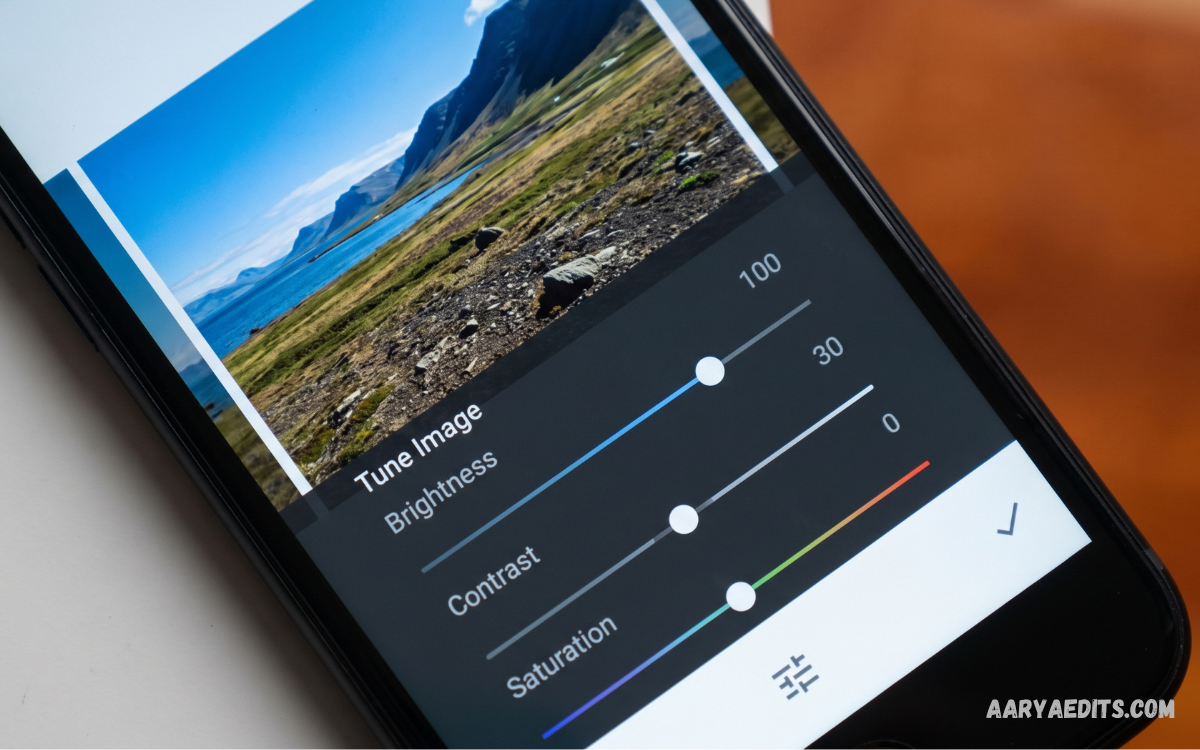
Tune Image is one of the most useful tools for everyday Snapseed photo editing. It provides controls for brightness, contrast, saturation, ambiance, highlights, shadows, and warmth. These settings can quickly improve photographs with poor exposure or unbalanced colors.
A professional approach involves making small adjustments instead of pushing every slider to an extreme value. Increasing brightness slightly, recovering highlights, opening shadows, and balancing saturation can often produce a cleaner image while preserving a natural appearance.
White Balance
White Balance helps correct unwanted color casts caused by different lighting conditions. Indoor lighting, cloudy skies, artificial lights, and certain camera settings can make photographs appear too warm or too cool.
Snapseed provides temperature and tint controls that allow users to correct these problems manually. Proper white balance can make skin tones look more natural and help objects appear closer to their real colors.
Details Tool
The Details tool is useful for enhancing texture and apparent sharpness. It includes controls related to structure and sharpening, helping photographs appear more defined.
However, excessive sharpening can create unwanted edges and digital-looking textures. Professional Snapseed photo editing usually requires moderation, particularly when working with portraits, low-resolution images, or photographs containing smooth surfaces.
Curves
Curves is an advanced adjustment tool that provides greater control over image brightness and tonal range. Users can manipulate different areas of the tonal spectrum to create contrast, brighten shadows, or control highlights.
Curves may appear complicated at first, but learning basic curve adjustments can significantly improve editing skills. A gentle S-curve, for example, can increase contrast by slightly lowering darker tones and raising brighter tones.
Selective Editing
Selective editing is one of Snapseed’s useful features for making localized adjustments. Instead of changing the entire image, users can target specific areas and modify brightness, contrast, saturation, or structure.
This approach is particularly helpful when one part of a photograph needs improvement while the rest already looks balanced. Selective editing can help brighten a subject, enhance a particular color, or reduce attention from a distracting area.
Healing Tool
The Healing tool can remove small unwanted elements from photographs. It is useful for cleaning up minor distractions such as small marks, dust spots, or unwanted objects in relatively simple backgrounds.
Successful healing depends heavily on the surrounding area. Simple backgrounds generally produce better results because Snapseed can create a more convincing replacement from nearby image information. Users should zoom into the photograph when working on small details.
Portrait Editing With Snapseed
Snapseed photo editing can be useful for improving portraits while maintaining a natural appearance. Basic adjustments can correct exposure, balance colors, improve contrast, and create a more polished final image.
Portrait editing should focus on lighting, color balance, and overall presentation rather than excessive changes. Natural skin tones and realistic facial details generally produce a more professional result than heavy smoothing or dramatic effects.
Snapseed Photo Editing for Selfies
Selfies often require adjustments because smartphone cameras can produce uneven lighting, strong highlights, or distracting backgrounds. Snapseed provides tools that can help correct these issues without requiring complex desktop software.
A practical workflow starts with exposure and white balance before moving toward details or creative effects. Small selective adjustments can then be applied to areas that need additional attention.
Landscape Photo Editing
Landscape photographs can benefit from adjustments to contrast, saturation, highlights, shadows, and structure. Snapseed provides enough control to enhance scenery while preserving important details.
For landscape Snapseed photo editing, users can begin by balancing exposure and recovering highlights. Moderate color enhancement can then make skies, vegetation, mountains, and other natural elements appear more visually engaging without making the photograph look artificial.
Food Photography Editing
Food photographs often depend on accurate color, balanced exposure, and attractive contrast. Snapseed can help improve these characteristics through Tune Image, White Balance, Details, and selective adjustments.
Warmth can sometimes make food photography feel more inviting, but excessive warmth may distort the actual colors of the food. Maintaining realistic tones while improving brightness and contrast usually creates a stronger final photograph.
Snapseed Photo Editing for Social Media
Social media platforms are highly visual, making consistent image editing an important part of content creation. Snapseed can help users create photographs with a recognizable appearance across different posts.
A consistent editing workflow can include similar brightness, contrast, color temperature, and saturation levels. Instead of applying random filters to every image, users can develop a repeatable style that makes their visual content look more organized.
Creating Custom Snapseed Looks
Snapseed allows users to build editing styles by combining multiple tools. This makes it possible to create a custom look based on personal preferences rather than relying entirely on standard filters.
A custom style might involve slightly increased contrast, controlled saturation, balanced warmth, and selective brightness adjustments. The ideal settings depend on the photograph, lighting conditions, and intended presentation.
Using Filters in Snapseed
Snapseed includes several creative filters that can dramatically change the appearance of an image. Filters can introduce vintage effects, dramatic contrast, black-and-white styles, film-inspired appearances, and other creative treatments.
Filters work best when used intentionally. Applying a strong effect at full intensity may hide important details or produce an unrealistic result. Reducing the strength of an effect can often create a more refined appearance.
Black and White Photo Editing
Black-and-white editing removes color information and shifts attention toward lighting, contrast, shapes, textures, and composition. Snapseed provides tools for creating monochrome photographs with different tonal characteristics.
A successful black-and-white edit often depends on contrast and tonal separation. Bright highlights, deep shadows, and carefully controlled midtones can help create visual depth while preserving important details.
Double Exposure
Double Exposure is a creative Snapseed feature that combines two images into one composition. It can be used to create artistic overlays, silhouettes, abstract compositions, and experimental visual effects.
The strongest results usually come from images that complement each other in shape, lighting, or subject. Users can experiment with blending modes and opacity to control how strongly the two photographs interact.
Perspective Correction
Perspective problems can occur when photographs are captured from unusual angles, particularly when photographing buildings or architectural subjects. Snapseed’s Perspective tool can help correct certain distortions and improve visual balance.
Perspective correction should be applied carefully because aggressive adjustments can stretch or distort parts of the photograph. Checking edges and important subjects after editing helps maintain a realistic result.
Cropping and Composition
Cropping is one of the simplest ways to improve a photograph. Removing unnecessary areas can make the primary subject more prominent and create a stronger composition.
Snapseed provides cropping options that can help prepare images for different uses. Before cropping, users should consider the subject, visual balance, aspect ratio, and intended platform.
Rotating and Straightening Images
A slightly tilted horizon can make an otherwise strong photograph look unbalanced. Snapseed’s Rotate tool can correct orientation and help create a cleaner composition.
Straightening is particularly useful for landscapes, architecture, streets, and photographs containing strong horizontal or vertical lines. Even a small correction can noticeably improve the overall presentation.
RAW Photo Editing in Snapseed
RAW photographs contain more image information than standard compressed formats, giving photographers greater flexibility during editing. Snapseed supports RAW development on compatible devices and can provide additional control over exposure, highlights, shadows, and color.
RAW editing is particularly useful when the original photograph contains difficult lighting conditions. Users can make broader corrections while preserving more detail than may be possible with heavily compressed images.
Snapseed Photo Editing Workflow
A professional workflow generally begins with basic corrections before creative adjustments. Start by reviewing the image and identifying problems with exposure, white balance, composition, and distracting elements.
After basic corrections, users can work on details, selective adjustments, curves, and creative effects. Finishing with a final review at normal viewing size helps ensure the photograph remains balanced and natural.
Step 1: Review the Original Photo
Before editing, examine the entire photograph carefully. Identify areas that are too dark, too bright, overly colorful, poorly aligned, or visually distracting.
This initial review prevents unnecessary editing. Instead of changing every available setting, focus only on adjustments that improve the photograph’s actual weaknesses.
Step 2: Correct Composition
Crop, rotate, or adjust perspective when necessary. Composition should be addressed early because later color and exposure adjustments may be less useful if the framing itself is weak.
Keep the main subject clear and remove unnecessary visual space when appropriate. Avoid cropping important details unless the intended composition specifically requires it.
Step 3: Fix Exposure
Use Tune Image to adjust brightness, highlights, and shadows. The goal should be a balanced tonal range where important details remain visible.
Avoid making an image extremely bright simply because it looks more noticeable on a phone screen. Check both bright and dark areas to ensure important details have not been lost.
Step 4: Correct Colors
Adjust white balance before making strong saturation changes. Correct temperature and tint first, then evaluate the overall color appearance.
If additional color enhancement is required, increase saturation carefully. Natural colors generally create a more professional appearance than heavily exaggerated tones.
Step 5: Enhance Details
Use Structure and Sharpening carefully to improve clarity. These adjustments can make textures and edges more defined, but excessive values may introduce unwanted artifacts.
Zoom out periodically while editing. An adjustment that looks impressive when zoomed in may appear unnatural when viewed as a complete photograph.
Step 6: Apply Creative Effects
Creative filters should generally come after technical corrections. Once exposure, composition, and colors are balanced, users can experiment with filters and other artistic effects.
Reducing effect strength can help maintain detail and realism. Creative editing should support the photograph rather than completely hide its original character.
Common Snapseed Photo Editing Mistakes
One common mistake is excessive saturation. Increasing saturation can make colors appear more vibrant, but too much can destroy natural color relationships and reduce image quality.
Another mistake is overusing sharpening and structure. Strong detail adjustments may produce harsh edges and unnatural textures. Professional editing usually depends on subtle changes rather than maximum settings.
Read Also: Snapseed Editing: Complete Guide to Professional Photo Editing
How to Make Photos Look Professional in Snapseed
Professional-looking results depend more on controlled adjustments than complicated effects. A strong photograph usually has balanced exposure, accurate colors, clear composition, and appropriate contrast.
Users should also consider the original lighting and camera quality. Editing cannot completely replace good photography, but Snapseed can significantly improve a well-composed image by correcting technical problems and enhancing its strongest characteristics.
Snapseed Photo Editing Tips for Beginners
Beginners should learn one tool at a time rather than trying every feature immediately. Start with Crop, Rotate, Tune Image, White Balance, Details, and Healing before exploring advanced creative options.
Save different versions while learning. Comparing the original photograph with the edited result helps users understand whether each adjustment actually improves the image.
Snapseed Photo Editing Tips for Advanced Users
Advanced users can combine multiple adjustments to create a controlled workflow. Curves, selective adjustments, RAW development, healing, perspective correction, and creative effects can be used together when the image requires them.
A useful advanced technique is to make an adjustment, temporarily review the photograph without it, and then decide whether the change improves the overall image. This prevents gradual over-editing during long editing sessions.
Snapseed for Travel Photography
Travel photographs often contain mixed lighting, bright skies, shadows, people, architecture, and colorful environments. Snapseed provides enough tools to address many of these challenges from a mobile device.
Users can correct perspective in architectural photographs, balance skies and shadows, remove small distractions, and improve colors without carrying a laptop for basic editing tasks.
Snapseed for Product Photography
Product photographs require accurate colors and clear details. Snapseed can help improve exposure, white balance, contrast, and composition while preserving the appearance of the product.
Color accuracy should remain a priority. Strong filters may make a product look attractive but can also change its actual appearance, which is undesirable when photographs are used for product presentation.
Editing Night Photos in Snapseed
Night photographs can contain dark shadows, bright lights, noise, and strong color casts. Snapseed can help balance exposure and improve visibility in darker areas.
Users should avoid aggressively brightening every shadow because this may reveal noise and reduce image quality. Moderate corrections combined with controlled contrast generally produce better results.
Saving and Exporting Edited Photos
After completing Snapseed photo editing, review the final image before exporting it. Check exposure, colors, sharpness, composition, and small distracting elements.
Choose an appropriate output quality for the intended use. Social media images, personal archives, websites, and printed photographs may require different dimensions and quality settings.
Is Snapseed Good for Professional Photo Editing?
Snapseed is a capable mobile editor for photographers, creators, students, bloggers, and everyday users who want advanced controls without a complicated desktop workflow. Its combination of basic and advanced tools makes it suitable for many photography tasks.
However, professional photographers working with large commercial projects may still require specialized desktop software for advanced color management, extensive batch processing, catalog organization, or complex retouching. Snapseed is best viewed as a powerful mobile editing solution rather than a replacement for every professional photography workflow.
Frequently Asked Questions
What is Snapseed photo editing?
Snapseed photo editing is the process of enhancing and transforming photographs using the Snapseed mobile application. It provides tools for adjusting brightness, contrast, colors, details, perspective, and creative effects.
Is Snapseed good for photo editing?
Yes. Snapseed is a powerful mobile photo editor suitable for beginners and experienced users. It includes basic adjustments as well as advanced features such as Curves, Selective editing, Healing, Perspective, and RAW editing.
Is Snapseed easy to use for beginners?
Yes. Snapseed has a relatively simple interface, allowing beginners to start with basic tools such as Tune Image, Crop, Rotate, and White Balance. Users can gradually learn more advanced editing features.
Can Snapseed edit RAW photos?
Yes. Snapseed supports RAW editing on compatible devices. RAW development provides additional flexibility for adjusting exposure, highlights, shadows, and other image characteristics.
Can Snapseed remove objects from photos?
Yes. The Healing tool can remove certain small unwanted objects, marks, or distractions from photographs. Results depend on the size and complexity of the area being edited.
Can Snapseed improve photo quality?
Snapseed can improve the appearance of photographs by correcting exposure, colors, contrast, sharpness, composition, and other visual elements. However, editing cannot fully restore details that were never captured in the original image.
Is Snapseed useful for Instagram photos?
Yes. Snapseed can prepare photographs for social media by improving colors, exposure, composition, contrast, and overall presentation. Users can also create consistent editing styles for their social media content.
Can Snapseed edit portraits?
Yes. Snapseed includes tools that can improve portrait lighting, color balance, details, and overall appearance. Selective adjustments can also be used to make targeted changes without affecting the entire photograph.
How can I make photos look professional in Snapseed?
Start by correcting composition, exposure, and white balance. Then adjust contrast and details carefully before applying creative effects. Subtle adjustments generally produce more natural and professional results.
Does Snapseed have filters?
Yes. Snapseed includes multiple creative filters and effects. Users can apply these effects and adjust their intensity to create different photographic styles.
Can Snapseed edit photos without complicated software?
Yes. Snapseed is designed for mobile photo editing, allowing users to perform many advanced adjustments directly on a smartphone or tablet without requiring desktop editing software.
What is the best Snapseed tool for improving photos?
There is no single best tool for every photograph. Tune Image is useful for general corrections, while Curves, Selective, Healing, Details, White Balance, and Perspective are valuable for specific editing requirements.
Is Snapseed suitable for professional photography?
Snapseed can be useful for many professional and semi-professional mobile editing tasks. However, photographers working on large commercial projects may still prefer specialized desktop software for advanced workflows, organization, and batch processing.
How do I avoid over-editing photos in Snapseed?
Use small adjustments and regularly compare the edited image with the original. If colors, contrast, sharpening, or effects become distracting, reduce their intensity until the photograph looks balanced and natural.
Conclusion
Snapseed photo editing offers a practical way to transform ordinary smartphone photographs into polished images. Its combination of exposure controls, color adjustments, RAW editing, selective tools, healing, perspective correction, filters, and creative features gives users substantial control over their photographs.
The most important skill is not knowing how to use every tool but understanding when a tool is necessary. Start with composition, exposure, and color correction, then make targeted improvements before applying creative effects. With regular practice and a controlled editing approach, Snapseed can become a powerful part of a mobile photography workflow.
